
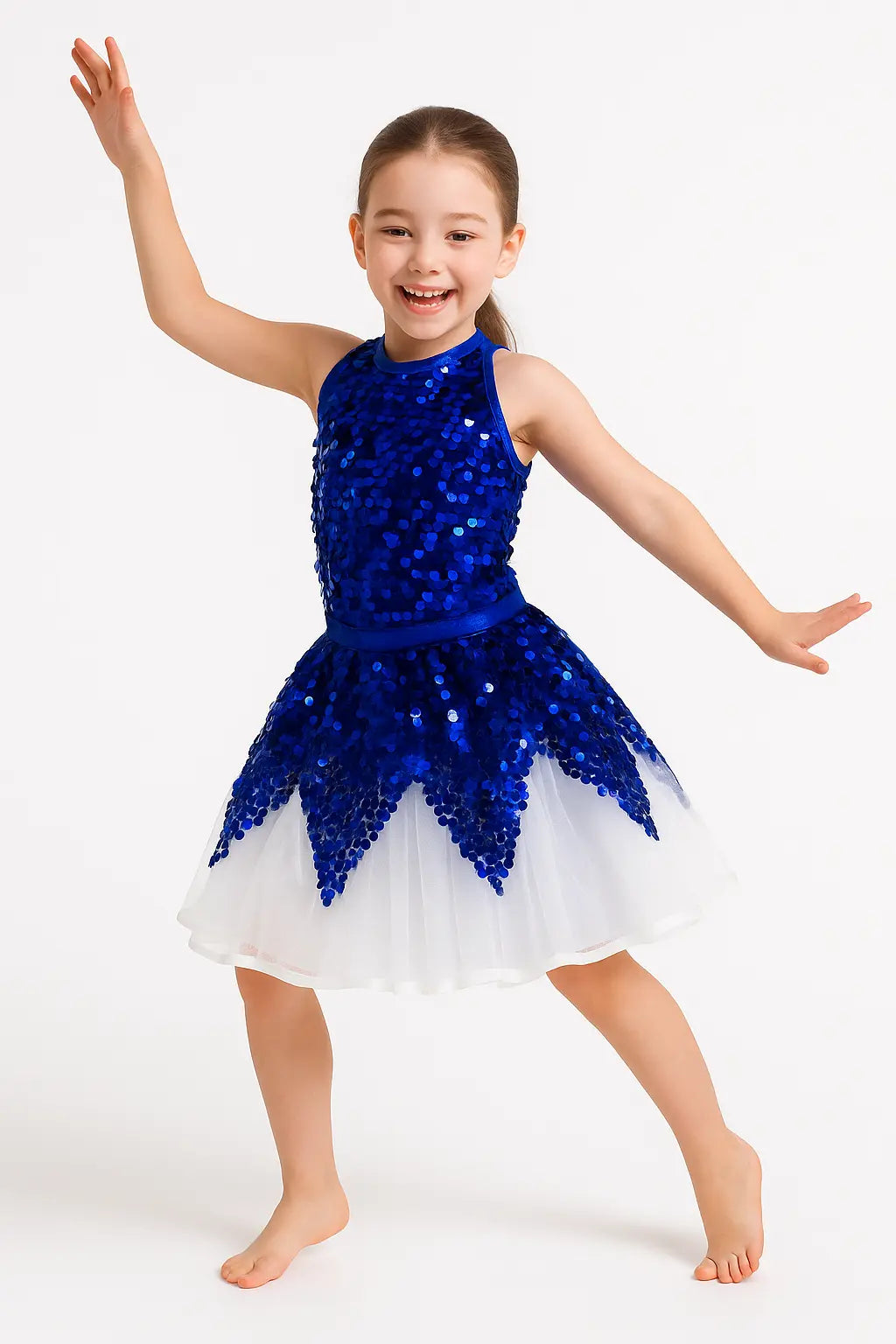
Most people shopping for dancing outfits focus on how they look standing still. In my experience, that’s the wrong moment to judge them. The real test happens during transitions—drops, turns, floor work, and quick directional changes. I once wore an outfit that felt perfect during rehearsal, only to realize under stage lights that the fabric lost structure as soon as I started sweating. By the final song, the waistband had stretched just enough to shift my center of balance. That taught me to test outfits under realistic conditions, not just in a fitting room.
Fabric choice separates usable outfits from frustrating ones. Stretch matters, but controlled stretch matters more. I’ve found that overly soft fabrics feel comfortable at first but tend to sag over time, especially during longer performances. Structured stretch materials, especially when lined properly, hold their shape without restricting movement. That balance isn’t obvious until you’ve worn the same outfit through multiple rehearsals and shows.
Fit is another area where dancers get caught off guard. An outfit that’s slightly off can change how you move. I once altered a top just a bit too snug through the ribcage, thinking it would stay in place better. Instead, it restricted my breathing during fast sequences. Since then, I fit outfits for movement first and aesthetics second. If I can’t breathe comfortably through a full run, the outfit doesn’t make the cut.
I’ve also seen dancers over-accessorize in ways that work against them. Extra straps, fringe, or embellishments can look dramatic, but they add weight and points of failure. I’ve had to do emergency fixes backstage because decorative elements snagged or pulled loose. Now I’m selective about details, favoring secure construction over visual excess.
Color and texture behave differently under lighting than they do in daylight. I learned this during a showcase where an outfit looked rich and deep backstage but flattened completely under bright lights. Since then, I always consider where the outfit will be worn. Stage lighting rewards contrast and texture more than subtle tones.
One of my most satisfying moments was helping a younger dancer choose her first serious outfit. She wanted something elaborate, but after trying it in motion, she noticed how heavy it felt. We switched to a simpler design with better support, and her confidence on stage was immediate. Watching her perform without constantly adjusting her outfit reminded me why these details matter.
Dancing outfits should disappear once the music starts. When they’re chosen well, you stop thinking about seams, straps, and stretch, and your focus stays where it belongs—on movement, timing, and expression. That’s the standard I hold every outfit to, whether I’m wearing it myself or helping someone else choose one.
 My background is mostly in Lua optimization and server-client balancing. I’ve worked on everything from tycoon games with runaway memory usage to PvP systems where one bad loop could lag an entire server. The first time I used The Forge script was during a soft launch where players were exploiting poorly protected remote events. I remember watching the server stats spike during peak hours and realizing our homegrown solutions weren’t going to hold. Integrating The Forge didn’t magically solve every issue, but it immediately gave me better control over execution flow and exploit resistance in places where Roblox’s default patterns fall short.